Home / Services / Reverse Osmosis

Reverse osmosis at the kitchen tap.

An under-sink unit with its own faucet for the water you drink and cook with. It works on dissolved solids, which whole-home filtration is not designed to take out.

It puts a second, smaller faucet at the sink, matched to your existing hardware. The main tap still handles dishes. The second one is for drinking, cooking and rinsing produce.

Why it matters in this county

How much this is worth to you depends on which system serves your house. Woodway reports average total dissolved solids of 584 mg/L, with a range of 314 to 808, and average sodium of 185.93 mg/L. Waco reports sodium of 16.0 to 17.9 mg/L. Those are two very different starting points for the water coming out of a kitchen tap.

How the stages work

  • A pre-filter stage, roughly the size of a large fridge filter.
  • The membrane itself, which is the stage that acts on dissolved solids.
  • A post-filter stage that puts minerals back, so the water does not taste flat.
On dissolved solids: a TDS meter reading is not a quality score. It counts dissolved minerals without distinguishing between them, and it goes back up on purpose after the remineralizing stage. Read it alongside your water report, not instead of it.

It fits under the sink

The unit is small enough to leave most of the cabinet usable. It can go in on its own, or at the same time as a whole-home setup, which is the simpler job of the two.

Pick a faucet that matches your kitchen

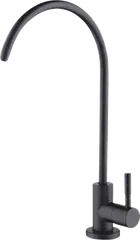
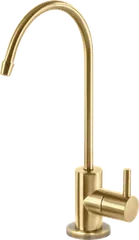
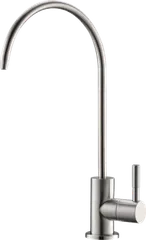
The drinking-water faucet comes in four finishes so it sits alongside the rest of your kitchen hardware. Tell us which one you want.
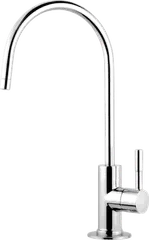
Chrome drinking water faucet
Chrome

Brushed nickel drinking water faucet

Brushed Nickel

Matte black drinking water faucet

Matte Black

Brushed gold drinking water faucet

Brushed Gold

Ready to see what your home needs? Get a Free Water Assessment or call 254-500-3727.